What Gets Measured
Six Parameters. One Integrated System.
Each parameter feeds the BAS in real time — enabling automated response sequences, trend logging, and continuous compliance documentation.
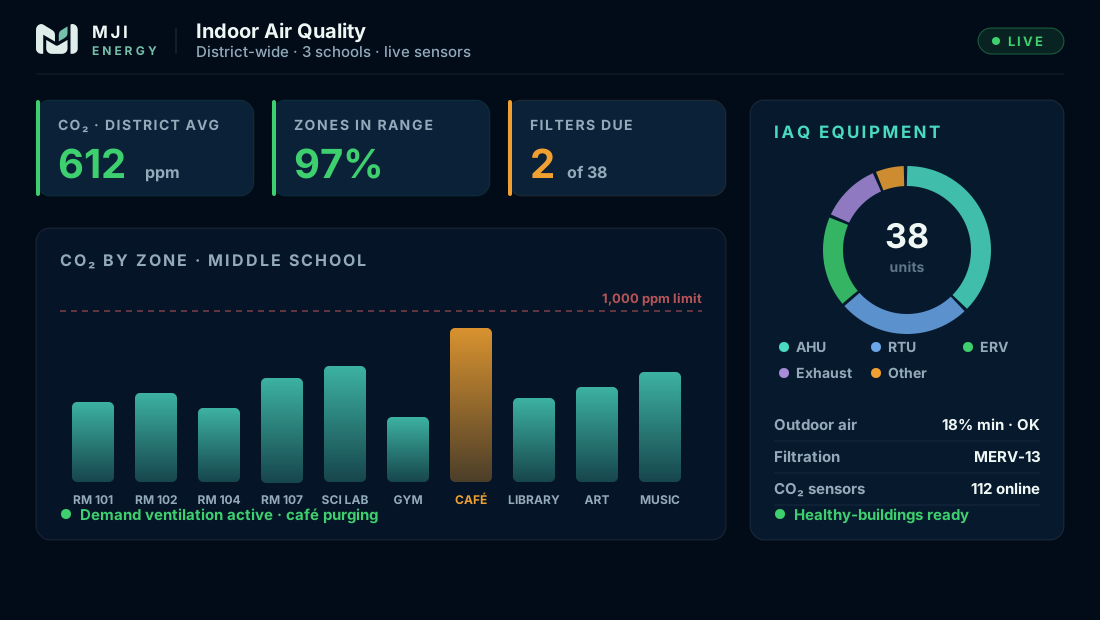
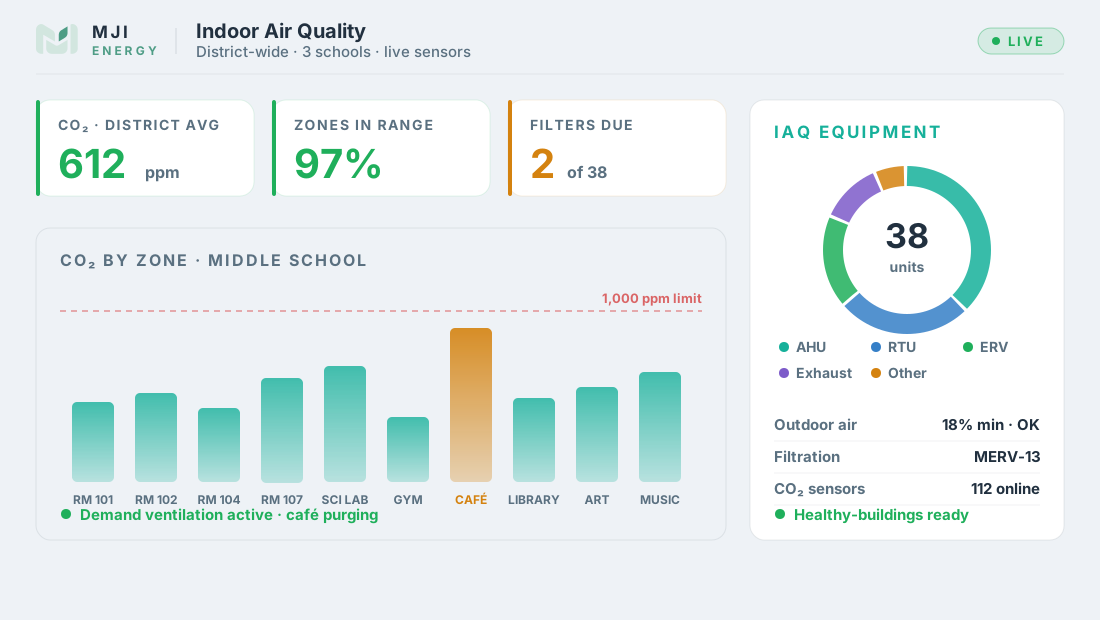
The primary demand control ventilation input. Rising CO2 indicates insufficient outdoor air dilution relative to occupancy — the BAS responds by opening OA dampers proportionally. At 900 ppm or below, WELL Building Standard v2 credits are earned.
Fine particles from outdoor infiltration, ductwork, toner, and occupant activity penetrate deep into lungs. Continuous PM2.5 monitoring triggers alerts when filtration is degrading or outdoor air quality events require damper closure. Required for LEED v5 IAQ Performance credits.
VOCs off-gas from furniture, adhesives, cleaning products, and building materials — especially after renovations or in newly occupied spaces. Elevated TVOCs include formaldehyde and benzene. BAS integration enables ventilation boost sequences when TVOC levels rise above threshold.
Unlike CO2, carbon monoxide is a direct life-safety hazard. Sources include combustion equipment, parking garages below occupied floors, gas boilers, and loading docks. CO monitoring should trigger AHU lockout and alarm sequences — a distinct, safety-critical BAS integration separate from DCV logic.
Real-time zone temperature data feeds directly into BAS setpoint control and occupant comfort dashboards. Trend logging identifies persistent drift and enables proactive maintenance before comfort complaints arise.
ASHRAE 62.1-2022 added maximum dew-point temperature requirements for mechanically cooled buildings to prevent mold growth. Integrated humidity monitoring allows the BAS to modulate dehumidification sequences before conditions become a biological IAQ issue.
The Code Connection
IAQ Monitoring + ASHRAE 62.1 DCV
ASHRAE Standard 62.1 — the ventilation standard referenced by the NYC Mechanical Code — permits and in many cases requires demand control ventilation, using CO2 sensors to modulate outdoor air delivery based on actual occupancy. This is the compliance and energy efficiency driver.
But CO2 is just one parameter. A comprehensive IAQ monitoring system extends that foundation — adding visibility into fine particulates, VOCs, carbon monoxide, humidity, and temperature, all feeding into the same BAS platform that controls DCV.
ASHRAE explicitly notes that CO2 concentration is a proxy for ventilation adequacy, not a direct health indicator. The parameters that directly affect occupant health — PM2.5, VOCs, and CO — require monitoring that goes beyond DCV.
Learn About ASHRAE 62.1 & DCV →Modulates OA dampers based on occupancy signal. Reduces HVAC energy 9–33%. Required by ASHRAE 90.1 for qualifying spaces.
Detects filtration degradation and outdoor air quality events. Triggers alerts and enables proactive filter service.
Flags off-gassing from furnishings and materials. Enables ventilation boost sequences during elevated VOC periods.
Life-safety alarm integration. Triggers AHU lockout and occupant alert sequences. Separate from DCV logic.
Standards & Compliance
IAQ Monitoring Supports Your Building's Certifications
62.1 Compliance Is a Mandatory Prerequisite
LEED v5 BD+C and ID+C projects require ASHRAE 62.1-2022 compliance as a fundamental prerequisite. Enhanced IAQ Performance credits — worth up to 10 points in O+M projects — require continuous monitoring of CO2, PM2.5, and TVOC with measurements every 15–60 minutes.
See how DCV supports LEED →CO2 ≤900 ppm Earns Ventilation Credit
WELL Building Standard v2 Air Concept offers up to 18 points. Option 4 for the A03 Ventilation Design precondition requires demonstrating CO2 ≤900 ppm in occupied spaces. IAQ monitors earning points must measure at least three parameters: PM2.5, CO2, and TVOCs.
See ASHRAE 62.1 & DCV →IAQ Monitoring Supports LL97 Documentation
NYC buildings facing Local Law 97 carbon penalties need measurable energy reduction strategies. DCV driven by CO2 sensors is one of the few controls-only approaches that reduces HVAC energy consumption without equipment replacement — and the trend data supports annual LL97 reporting.
See LL97 →