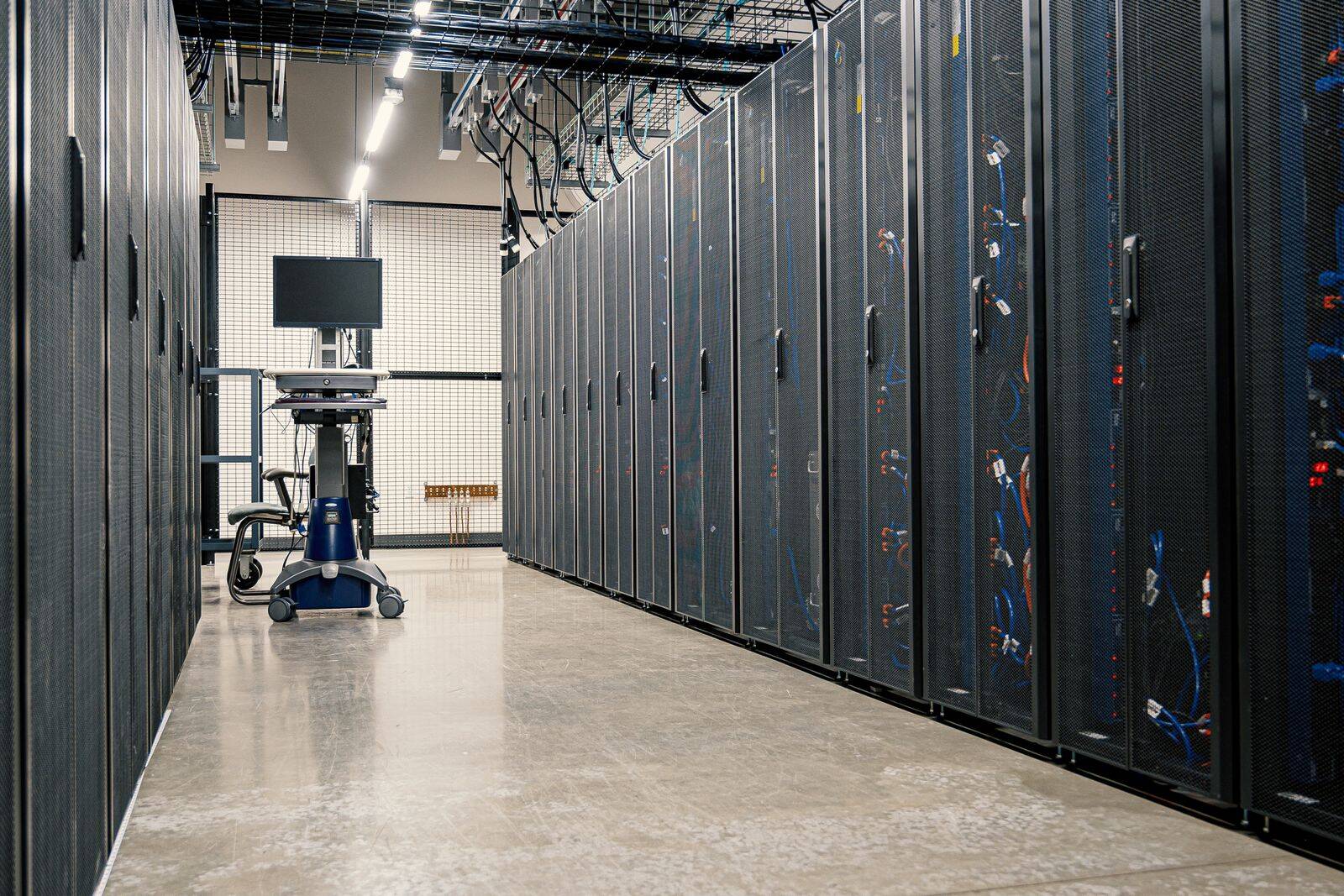
Why Data Center Controls Are Different
Data centers operate at a scale and criticality that makes standard commercial building automation completely inadequate. A Class A office building that overcools by a few degrees wastes money. A data center that loses cooling loses equipment — and potentially the clients whose infrastructure depends on it. The controls architecture has to match the consequence of failure.
Modern hyperscale and enterprise data centers run IT loads that shift continuously as workloads migrate between racks and floors. Cooling infrastructure must respond dynamically — not on a fixed schedule, but in real time, based on actual thermal conditions and load forecasts. That requires precision sensing, fast control loops, and integration between IT infrastructure management and the physical facilities systems.
MJI Energy designs BAS for data center environments with the redundancy, alarm management, and fault response sequences that Tier III and Tier IV facilities demand. We understand both the mechanical systems and the operational priorities that govern how those systems must behave.
Key Applications
Precision Air Cooling Control
Dynamic control of CRAC/CRAH units, in-row coolers, and computer room air handlers to maintain temperature within tight tolerances — adjusting in real time to changing IT load density and ambient conditions.
Hot/Cold Aisle Containment Management
Automated management of containment systems, blanking panels, and airflow routing to maximize the separation of hot and cold aisles and eliminate recirculation hotspots.
Chiller Plant Optimization
Lead-lag sequencing, chilled water reset, and condenser water optimization for central chiller plants serving large data center campuses, with demand-based staging to minimize energy while protecting SLAs.
Humidity Control and Monitoring
Maintaining ASHRAE A1/A2 humidity ranges (40–60% RH) with coordinated humidifier and dehumidifier control, and real-time alerts when humidity approaches limits that risk static discharge or corrosion.
Power Usage Effectiveness (PUE) Monitoring
Continuous calculation and trending of facility PUE from integrated power metering and BAS data — providing the real-time visibility operators need to improve energy performance and satisfy sustainability reporting requirements.
Emergency Response and Failover Sequences
Automated fault response sequences that switch cooling to backup paths, alert on-call teams, and maintain critical zones within thermal limits during primary equipment failures — without requiring manual intervention.
Who We Work With
Data center cooling doesn't tolerate margin for error.
Let's talk about your facility, your requirements, and what a purpose-built controls solution looks like for your environment.
Discuss Your Facility →